Our Learning
Numeracy at WPS
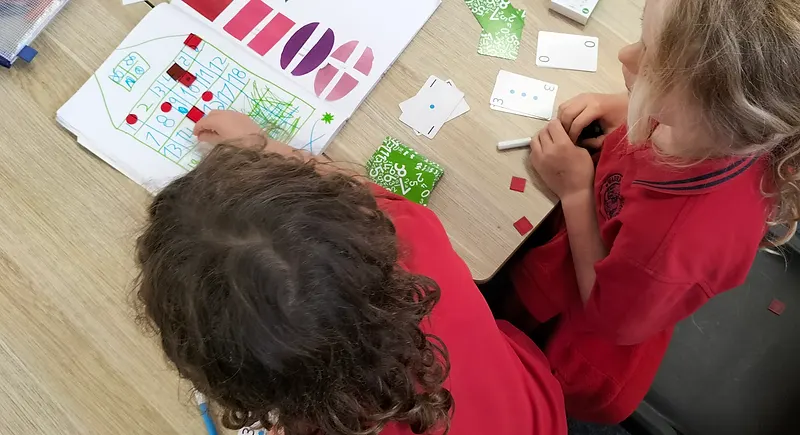
Real-life tasks, hands-on investigations, explicit teaching and problem solving — building mathematical thinkers from Foundation through to Year 6.
Mathematics in everyday life.
Numeracy is the knowledge, skills, behaviours and dispositions that students need in order to use mathematics in a wide range of situations. It involves recognising and understanding the role of mathematics in the world and having the dispositions and capacities to use mathematical knowledge and skills purposefully.
At WPS, our mathematics program is built on the Victorian Curriculum F–10 Version 2.0, covering six interconnected strands — Number, Algebra, Measurement, Space, Statistics and Probability — taught explicitly and explored through rich, open-ended tasks every day.
Explicit teaching underpins mathematics instruction in every strand and at every year level. Teachers model new concepts and strategies clearly, guiding students through worked examples before they practise and apply their learning independently. Whether it's place value, fractions, measurement or data, our teachers use a consistent I Do / We Do / You Do lesson structure — first demonstrating the thinking, then working through problems together, and finally releasing responsibility so students can consolidate their understanding with confidence.
This explicit approach ensures that foundational skills, mental strategies and mathematical language are taught systematically, giving every student the secure knowledge base they need to engage with rich, open-ended problem solving — and to use mathematics purposefully in everyday life.
Four mathematical capabilities
Understanding
Building conceptual knowledge of mathematical ideas and how they connect to real-world situations.
Fluency
Developing accuracy and efficiency with mathematical facts, procedures and mental strategies.
Problem Solving
Applying mathematics to unfamiliar situations with flexibility, creativity and persistence.
Reasoning
Explaining and justifying mathematical thinking logically, clearly and with evidence.


Our Teaching Philosophy
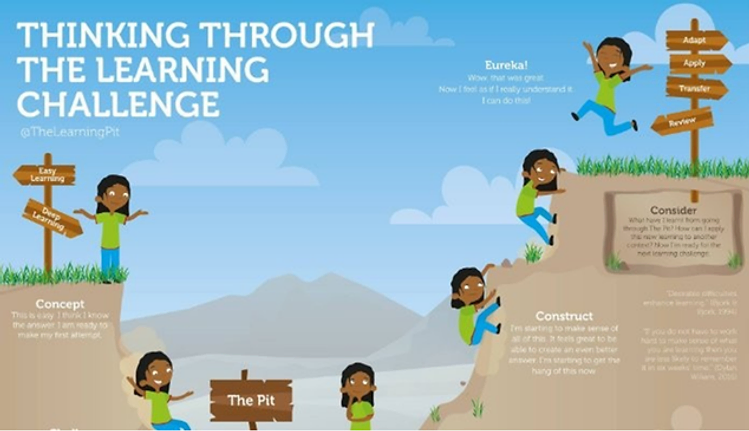
The power of productive struggle.
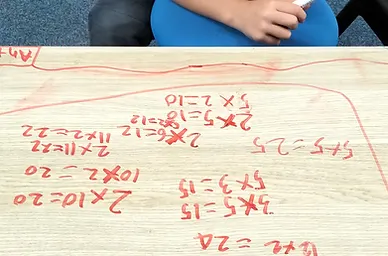
At WPS, we intentionally create opportunities for students to struggle productively with mathematics. This means giving students tasks that are genuinely challenging — problems that require thinking, not just recalling a memorised procedure.
Research consistently shows that when students work through difficulty themselves, they develop a deeper and more durable understanding of mathematical concepts than when they are shown a method to copy. The effort of working something out strengthens neural pathways and builds genuine mathematical confidence.
Our teachers carefully design tasks that sit in each student's "zone of proximal development" — challenging enough to require real thinking, but accessible enough that with persistence and the right support, every student can experience success.
Importantly, productive struggle is not about leaving students to flounder. Our teachers observe, prompt with questions, encourage peer discussion and celebrate the process of thinking — not just correct answers.
Deeper Understanding
Students build genuine conceptual knowledge, not just procedural memory.
Growth Mindset
Mistakes are reframed as essential steps in the learning journey.
Lasting Confidence
Students who struggle and succeed believe they can solve hard problems.

Teaching Model
Inquiry Numeracy Model
The latest evolution of our teaching and learning program is the implementation of an Inquiry Numeracy model that uses open-ended questions and problem-solving activities to engage students in active learning and promote a deeper understanding of mathematical concepts.
Tasks have many different entry points — encouraging discussions and student-led investigations that build critical thinking and analytical skills regardless of where a student is starting from.
Download Numeracy Overview (PDF)Curriculum Planning
Mathematics Scope & Sequence — Foundation to Year 6.
Our yearly mathematics plan is structured into four terms, each with a clear focus aligned to the Victorian Curriculum. Below is a summary of the key concept areas covered each term, from Foundation through to Level 6.
Term 1
Place Value, Number Facts & Time
- Place Value & Partitioning
- Estimation & Rounding
- Addition & Subtraction Facts
- Multiplication Foundations
- Time & Duration
Term 2
Fractions, Patterns & Data
- Addition & Subtraction
- Fractions & Equivalency
- Number Sequences & Patterns
- Shapes & Space
- Statistics — Collecting & Organising Data
Term 3
Multiplication, Money & Measurement
- Sharing, Grouping & Multiplication
- Division Strategies
- Number Facts — Multiplication & Division
- Money & Financial Contexts
- Length, Mass, Capacity & Angles
Term 4
Algorithms, Location & Probability
- Algorithms & Number Patterns
- Statistics — Creating & Interpreting Graphs
- Space & Location
- Probability & Chance Experiments
- Number Revision
Download
Full Mathematics Scope & Sequence 2025
The complete Foundation to Level 6 scope and sequence, including all Victorian Curriculum content descriptors for every term — suitable for printing at A3.

