Sunset view from Warrandyte Primary School

Wellbeing

Every student safe, known, supported and ready to learn.

Our wellbeing approach combines positive behaviour support, explicit social-emotional learning, inclusive practice and targeted support when students need more.

People & support

A team around the student.

Classroom teachers remain the key point of connection for students and families, supported by school leadership, Education Support staff, the Mental Health and Wellbeing Leader, the Disability Inclusion Coordinator and external or Department specialists when required.

Kylie Somerfield, Mental Health and Wellbeing Leader at Warrandyte Primary School

Kylie Somerfield

Mental Health & Wellbeing Leader

Kylie's role is part of the Mental Health in Primary Schools initiative, funded by the Victorian Department of Education to place a dedicated Mental Health and Wellbeing Leader in every government primary school.

Kylie builds the capacity of teachers to identify and respond to the mental health and wellbeing needs of students, strengthens whole-school wellbeing practices, and helps connect students and families with the right support at the right time — ensuring early, coordinated care when it is needed most.

Penny MacDonald, Education Support Leader at Warrandyte Primary School

Penny MacDonald

Education Support Leader

Education Support (ES) staff work alongside classroom teachers to help every student access and engage with learning. They support individual and small-group learning, assist with regulation, communication and social connection, adapt tasks and materials to meet a range of needs, and provide the additional time and attention that helps students build confidence and independence.

By working collaboratively with teachers, ES staff add capacity to the classroom — ensuring that the right support is in place at the right time, keeping all students connected to learning and to one another.

James Schultz, classroom teacher at Warrandyte Primary School

James Schultz

Classroom Teacher

James is a classroom teacher and a member of our broader wellbeing team. He is currently undertaking Mental Health and Wellbeing training, building his capacity to support student social-emotional needs and strengthen wellbeing practice within his classroom and across the school.

Through this training, James is developing practical strategies to identify and respond early to student mental health needs, contributing to the connected, whole-school approach that keeps every student known and supported.

Winston, the Warrandyte Primary School wellbeing dog

Dogs in Schools

Wellbeing dog — Winston

Through the Dogs in Schools program, our trained wellbeing dog, Winston, provides calm connection and positive engagement for students as part of the school's broader wellbeing approach.

Policies and formal procedures

For detailed requirements relating to child safety, bullying prevention, behaviour, inclusion and student wellbeing, visit our policy library.

View policies

Dogs in Schools

Meet Winston, our wellbeing dog.

Warrandyte Primary School is proud to take part in the Dogs in Schools program. Winston, our trained wellbeing dog, is a gentle and much-loved member of our school community who supports students' social, emotional and learning needs in a natural, everyday way.

Research and experience show that a wellbeing dog can help reduce anxiety, encourage engagement, build empathy and provide a calming presence in classrooms and playgrounds. Winston works alongside our staff to create safe, predictable and connected learning environments.

Emotional regulation

A calm, non-judgmental presence that helps students settle, regulate and refocus during the school day.

Connection & empathy

Builds trust, empathy and positive relationships, particularly for students who are hesitant or anxious.

Engagement & belonging

Encourages attendance, participation and a genuine sense of belonging within the school community.

Safe & supervised

Winston is trained and handled by staff. Interactions are voluntary, supervised and families may opt out at any time.

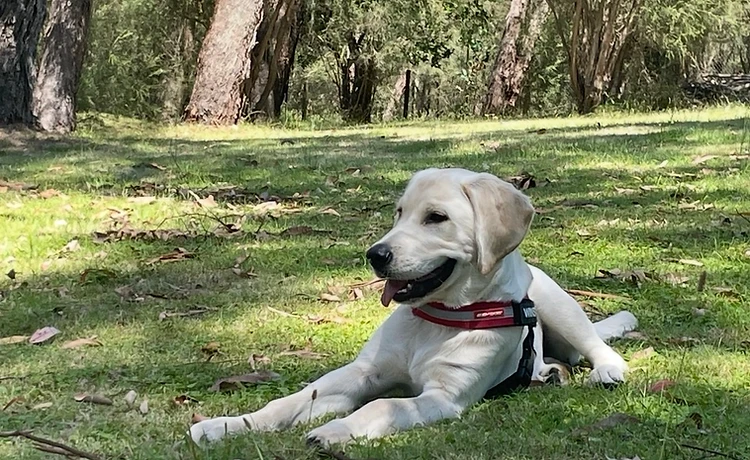
Winston the wellbeing dog relaxing in the school grounds
Wellbeing Dog

Winston — a calm friend to every learner.

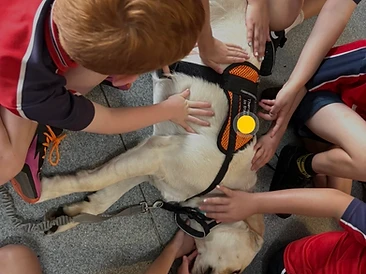
Students gently patting Winston the wellbeing dog together
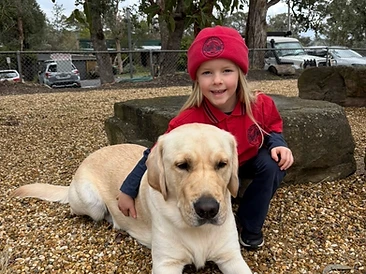
A student smiling while hugging Winston the wellbeing dog
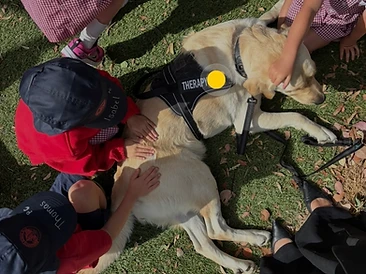
Winston the wellbeing dog relaxing on the grass surrounded by students

Our approach

Wellbeing and learning are inseparable.

Students learn best when they feel safe, connected and confident about what is expected of them. Our approach is proactive: we explicitly teach routines and behaviour, build relationships, create predictable classrooms and respond early when a student needs additional support.

Respect

We treat people, places and learning with care.

Responsibility

We make safe choices and take ownership of our actions.

Resilience

We persist, regulate and recover when things are difficult.

Kindness

We look out for one another and act with compassion and empathy.

Positive classroom management & SWPBS

Teach the behaviour we want to see.

WPS uses School-Wide Positive Behaviour Support and positive classroom management strategies to create calm, predictable learning environments. Expectations are explicitly taught, practised and reinforced rather than assumed.

Clear expectations

Students know what respectful, responsible and resilient behaviour looks like in classrooms and shared spaces.

Strong routines

Entry, transitions, learning time and pack-up routines reduce uncertainty and maximise time for learning.

Positive acknowledgement

Staff notice and reinforce behaviour that supports learning, safety and belonging.

Consistent responses

When behaviour does not meet expectations, staff respond calmly, proportionately and with a focus on restoring learning.

School-Wide Positive Behaviour Support

SWPBS at Warrandyte Primary School

School-Wide Positive Behaviour Support (SWPBS) is an evidence-based framework promoted by the Victorian Department of Education to help schools create safe, inclusive and positive learning environments. Rather than focusing on consequences alone, SWPBS teaches and reinforces the behaviours we want to see — across every space, every day.

At WPS, SWPBS is embedded throughout the school through our Behaviour Matrix — a shared set of expectations built around our four core values: Respect, Responsibility, Resilience and Kindness. These expectations are explicitly taught, displayed and consistently reinforced by all staff across all school settings, from classrooms and playgrounds to toilets, technology and beyond.

The Department of Education supports SWPBS as a whole-school approach that reduces problem behaviour, improves school climate and ensures all students have the social and emotional skills they need to succeed — giving every student the best opportunity to engage in learning.

WPS School Wide Positive Behaviours matrix

WPS School Wide Positive Behaviours Matrix

Our behaviour matrix sets out the expectations for Respect, Responsibility, Resilience and Kindness across all school settings — all areas, all the time.

View the full SWPBS Matrix

Positive Classroom Management Strategies

Clear routines. Calm classrooms. Better learning.

Positive Classroom Management Strategies (PCMS) are evidence-based procedures that explicitly teach students what good classroom behaviour looks and sounds like in every context — from sitting at their desk to lining up after playtime. Rather than correcting misbehaviour after the fact, PCMS take a proactive approach: expectations are directly taught, modelled and practised until they become routine.

A substantial body of research confirms that consistent classroom routines and explicit behavioural expectations significantly increase student engagement, reduce instructional time lost to transitions, and create a sense of predictability and safety that supports all learners — particularly those with anxiety, additional needs or limited prior schooling experience. At WPS, these strategies are applied consistently across every classroom and year level, so students always know what is expected of them regardless of which teacher they are with.

Download poster set (PDF)

Independent Work at Desk

  1. 1Get all materials out and begin your work
  2. 2Stay in your seat — hands up if you need help
  3. 3Review your work before you finish
  4. 4Place finished work into the correction box
  5. 5Select an 'Early Finishers' task until the lesson ends

Lining up to Exit Classroom

  1. 1Put materials away, clear desk and organise bag
  2. 2When called, push in chair and walk quietly to the doorway
  3. 3Line up facing the door, one space between each person
  4. 4Raise hand if you need help or permission to move
  5. 5Keep hands and feet to self
  6. 6Wait for teacher's direction to depart

Keeping Desk Tidy

  1. 1Pencil case and book at desk
  2. 2Drink bottle at your feet
  3. 3Listen for where your teacher wants work put away
  4. 4Toys are not permitted

School Uniform @ WPS

  1. 1Red up top (Grade 6 jumper an exception)
  2. 2Navy only down bottom
  3. 3School dress — red and white check
  4. 4Navy wide-rimmed hat or beanie
  5. 5Runners or black closed-toe shoes only
  6. 6White, black or navy socks only
  7. 7Sports top for Level 3–6 only — no Crocs or baseball caps

Transition to Specialist's 1-2-3

  1. 1Organise desk and tuck in your chair
  2. 2Line up in roll order at the door — hands on head when ready
  3. 3Walk quietly to or from Specialist's around the school grounds

Line up after Playtime

  1. 1Line up in roll order
  2. 2Leave space between you on either side
  3. 3Hands and feet to yourself
  4. 4Stand quietly and face your teacher
  5. 5Listen for the next instruction

Taking the Roll

  1. 1Sit quietly so your teacher can start the roll call
  2. 2When your name is called, politely respond with 'here' or 'good morning/afternoon'
  3. 3Stay quiet until all names are called
  4. 4Listen to the teacher's next instruction

Voice Levels in the Classroom

  1. 1Level 0 — Silence: no talking at all; for reading and assessments
  2. 2Level 1 — Whisper: only the person next to you can hear
  3. 3Level 2 — Table Talk: normal speaking voice for your small group only

Handing out Materials

  1. 1The teacher chooses who will hand out materials
  2. 2When you receive materials, move to your workspace quietly
  3. 3If you don't receive materials, raise your hand and ask politely
  4. 4Start work at the volume level the teacher has set

Student voice

Attitudes to School Survey — 2026 results

At Warrandyte Primary School, student voice is an important measure of how well we are creating a safe, connected and supportive environment in which children can learn and thrive. The Victorian Government's 2026 Attitudes to School Survey (AtoSS), completed by students in Years 4–6, provides strong evidence of the positive culture experienced by our students.

Particular strengths in 2026

Student connection · safety · help-seeking · perseverance and relationships.

Student connectionSafetyHelp-seekingPerseveranceRelationships

Connection

Students feel a strong sense of belonging to the WPS community.

Safety

Students feel safe at school and in online environments.

Help-seeking

Students know there are trusted adults they can turn to.

Perseverance

Students show confidence, persistence and self-regulation.

WPS results vs benchmarks

WPS Similar Schools Network State

Feel they have an advocate at school

90%
87%
88%
88%
Above all benchmarks

High community connections

90%
82%
79%
75%
Significantly above all benchmarks

Peer relationships rated good / very good

88%
88%
86%
86%
Above Network & State

No negative online experiences

84%
83%
83%
80%
Above all benchmarks

Positive endorsement of bullying management

80%
78%
80%
78%
Up from 69% in 2025

Find it easy / very easy to seek help

76%
67%
68%
70%
Well above all benchmarks

Positive endorsement of perseverance

83%
77%
78%
77%
+5–6 pts above benchmarks

Positive attitudes to attendance

85%
84%
83%
83%
Above Similar Schools

High expectations for success

92%
88%
88%
88%
Culture of aspiration

Self-regulation & goal setting

82%
80%
80%
80%
Strong

Strong sense of confidence

82%
79%
79%
79%
Strong

Life satisfaction

77%
78%
79%
78%
Up from 73% in 2025

Emotional awareness & regulation

74%
74%
73%
73%
Equal to Similar Schools

What these results tell us

These results tell an important story: our students feel connected to their school and to one another, know there are adults they can turn to, and are increasingly developing the confidence, perseverance and self-regulation needed to flourish. We are particularly proud that some of our strongest results are in the areas that sit at the heart of wellbeing — belonging, relationships, advocacy and help-seeking.

Belonging & community connection significantly above all benchmarks.
Bullying management improved from 69% (2025) to 80% (2026).
Help-seeking well above similar schools, network and state.
Life satisfaction improved from 73% (2025) to 77% (2026).
Emotional awareness improved from 69% (2024) to 74% (2026).
High expectations for success at 92% — a culture of aspiration.

Social and emotional learning.

Through The Resilience Project and classroom wellbeing learning, students build practical skills in emotional literacy, gratitude, empathy, mindfulness, help-seeking, relationships and regulation. These skills are reinforced through everyday classroom language and interactions.

GratitudeEmpathyMindfulnessEmotional literacyHelp-seekingSelf-regulationRelationships

Multi-tiered support — MTSS model

Evidence-based supports at every level of need.

Warrandyte PS uses a Multi-Tiered System of Support (MTSS) to match the intensity of wellbeing and behaviour support to student need — ensuring every student is well-supported, and those who need more receive it sooner.

Tier 1

Good for All — Promotion & Prevention

Whole School Strategies

  • SWPBS behaviour matrix
  • Positive acknowledgement system
  • Respectful Relationships
  • The Resilience Project
  • Student leaders
  • Consistent routines
  • School houses
  • Buddy program
  • Camps, excursions and incursions
  • Lunchtime clubs
  • Principal Awards

Classroom Strategies

  • Daily Community Connections
  • Positive acknowledgment/praise (SWPBS tokens with class reward)
  • Visual timetables
  • Reading/Calm corner
  • Brain breaks
  • Start Up program (Term 1)
  • Scaffolded lesson planning
  • Environment design (layout/transitions, seating)
  • Teacher modelled behaviour
  • Teacher roaming/active supervision

Tier 2

Necessary for Some — Early Intervention

Whole School Strategies

  • Consistent and calm response
  • Restorative practices
  • Student Support Group
  • Individual Education Plan
  • Learning intervention groups
  • Social skills group
  • Student behaviour incident / reflections forms
  • Compass reporting

Classroom Strategies

  • Increased parent/carer communication
  • Increased acknowledgment of positive behaviours
  • Identify triggers and function of behaviour
  • Use of SWPBS tools: Prompt/Redirect/Reteach/Direct Choice
  • Goal setting
  • Classroom based Check-Ins/Check-Outs
  • Brain breaks (targeted)
  • First and Then charting / Social Stories

Tier 3

Essential for a Few — Intensive Support

Whole School Strategies

  • Student Support Group
  • Individual Education Plan
  • Functional Behaviour Assessment
  • Behaviour Support Planning
  • Student Safety Plans
  • Risk assessment
  • Referral to SSS
  • Engagement with internal/external support agencies
  • Compass data collection

Classroom Strategies

  • Scheduled Check-Ins/Check-Outs
  • Planned Play
  • Increased acknowledgement of positive behaviour
  • Communication with parent/carers
  • Explicit goal setting and teaching
  • Reasonable adjustments
  • Check ins at key times of the day
  • ES support
WPS Student Wellbeing Tiered Approach pyramid diagram

Student Wellbeing — Tiered Approach

Warrandyte Primary School's wellbeing pyramid maps our evidence-based whole-school and classroom strategies across each tier of the MTSS model.

View full pyramid diagram

Inclusive practice and Disability Inclusion.

Adjustments are part of everyday teaching at WPS. Teachers may adapt instructions, task length, grouping, sensory demands, visual supports, access to movement or regulation breaks, and the way students demonstrate learning. Where needs are significant and ongoing, Student Support Groups and Disability Inclusion processes help coordinate a more individualised response.

Individual Education Plans where appropriate
Student Support Groups with families and professionals
Education Support staff targeted to identified need
Collaboration with Student Support Services and external professionals

Disability Inclusion

A strengths-based approach to supporting students with disability.

Disability Inclusion is the Victorian Department of Education's approach to supporting students with disability in government schools. It replaces the previous Program for Students with Disabilities with a more inclusive, strengths-based model designed to recognise the diverse needs of students and help schools respond with the right adjustments.

Tiered funding

Supports all schools to build capacity (Tier 1), provides targeted school-level funding (Tier 2), and offers individualised funding for students with significant, complex needs (Tier 3).

Disability Inclusion Profile

A structured meeting, led by a trained facilitator, that brings together the family, teachers and relevant professionals to identify the student's strengths, needs and functional impact.

Collaborative planning

Outcomes of the profile inform the Student Support Group, individual plans and the adjustments teachers make so each student can access, participate and succeed at school.

How the process supports students

Rather than focusing only on diagnosis or funding, Disability Inclusion centres on understanding each child as a learner — their strengths, interests and the barriers they experience — and then planning practical, documented adjustments. Families are equal partners in the process, and teachers are supported to translate the profile into everyday classroom practice.

Identifies a student's strengths, needs and functional impact on learning
Determines reasonable adjustments to curriculum, instruction and environment
Strengthens the Student Support Group with families and professionals
Builds teacher capacity through shared, documented understanding
Coordinates specialist input and external expertise where required
Targets funding and resourcing to assessed, individual need

Acknowledgement of Country

Warrandyte Primary School acknowledges the Wurundjeri people, the Traditional Custodians of the land we live, work and travel upon, and we pay our respect to Elders past and present. We recognise and respect the history, culture, diversity and continuing connection of Aboriginal and Torres Strait Islander peoples to Country.

Warrandyte Primary SchoolSchool No. 12 · Warrandyte, Victoria

A Victorian Government primary school combining a strong community, rich local heritage and evidence-informed teaching to help every child learn, belong and thrive.

Contact

© 2026 Warrandyte Primary School. A Victorian Government school.

    base44
    Edit with Base44